

What blobspace markets track
Blobspace is the secondary data availability layer that sits alongside Ethereum’s main blockspace. While traditional blockspace handles execution and consensus, blobspace exists to store large amounts of data efficiently for Layer 2 rollups. This distinction is critical: blobspace is not just cheaper storage; it is a separate economic resource with its own supply constraints and pricing mechanics.
Monitoring blob costs is essential for understanding L2 economics. Unlike L1 gas, which fluctuates based on transaction complexity and network congestion, blob gas prices are driven by the demand for data availability. When Layer 2 networks need to post more data to the chain, blob demand spikes, driving up costs for everyone relying on that data. This creates a direct feedback loop between L2 activity and the cost of securing their data on Ethereum.
The market for blobspace operates on a dual-fee structure. Transactions split their cost into a base fee, which clears the block, and a priority fee, which incentivizes proposers to include the blob. This mechanism ensures that as demand for data availability grows, the market naturally allocates the limited blob capacity to those who value it most. Understanding this dynamic is the first step in building a reliable monitoring checklist for L2 fee structures.
Post-pectra capacity shifts
The Pectra upgrade fundamentally altered the supply elasticity of blobspace by raising both the target and maximum number of blobs per block. Before the upgrade, the network capped blob limits at 6 per block. Post-Pectra, these figures shifted to a target of 6 and a hard maximum of 9 blobs per block. This structural change directly expanded the available supply of blob space, allowing rollup operators to publish more data without hitting the block gas limit as frequently.
Increased supply naturally exerts downward pressure on fees, but it also introduces new dynamics to the fee market. With more blobs fitting into each block, the competition for space becomes less intense during normal traffic periods. However, during high-demand spikes, the larger capacity can absorb more volume before fees escalate sharply. This creates a wider window of stable pricing for rollup providers, reducing the volatility that previously characterized the blobspace market.
To understand how this shift plays out in real-time, it is helpful to look at the current fee environment. The following chart visualizes recent Ethereum gas fee trends, reflecting the market's adjustment to the new capacity parameters.
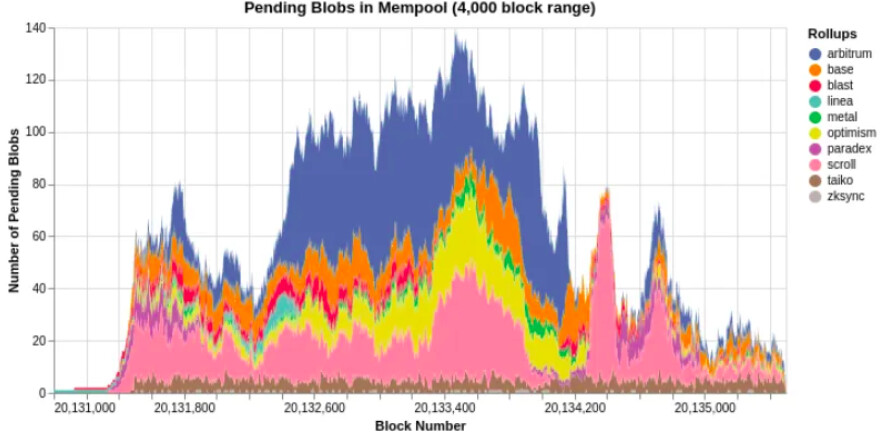
The economic implications of this competitive blob market are significant for long-term scalability. As noted in Ethereum Research, the increased capacity allows for more efficient data availability, which is critical for the growth of Layer 2 solutions. The shift from a constrained supply to a more elastic one marks a maturation of the blobspace market, moving it from a bottleneck to a scalable resource.
Rollup cost comparison
Comparing rollup costs requires looking beyond headline gas prices. The primary driver of user expense on blobspace-dependent chains is the price of EIP-4844 blobs. When blob prices spike, L2s that rely heavily on this data availability layer see immediate fee increases.
The table below contrasts major L2s based on their blob dependency and typical fee structures. While exact numbers fluctuate with network congestion, the relative hierarchy remains stable. Arbitrum and Optimism generally offer lower base fees due to efficient data compression, whereas zkSync and Base may see higher volatility during peak blob demand.
| Rollup | Blob Dependency | Avg Fee (USD) | Blob Capacity Util |
|---|---|---|---|
| Arbitrum One | High | 0.05 | 60-80% |
| Optimism | High | 0.08 | 50-70% |
| Base | High | 0.10 | 70-90% |
| zkSync Era | Medium | 0.12 | 40-60% |
| Starknet | Low | 0.04 | N/A |
Users paying for high-frequency transactions should monitor the Ethereum blob fee dashboard closely. A shift in blob capacity utilization directly impacts the final cost per transaction for all dependent L2s.
Blob fee monitoring checklist
Track the health of the blobspace market by watching capacity utilization and fee spikes. This checklist helps operators and investors stay ahead of congestion.
Monitor the ratio of used blobs to the target (14) and max (21) per block. High utilization signals demand and impending fee increases. Use block explorers to view real-time blob counts.
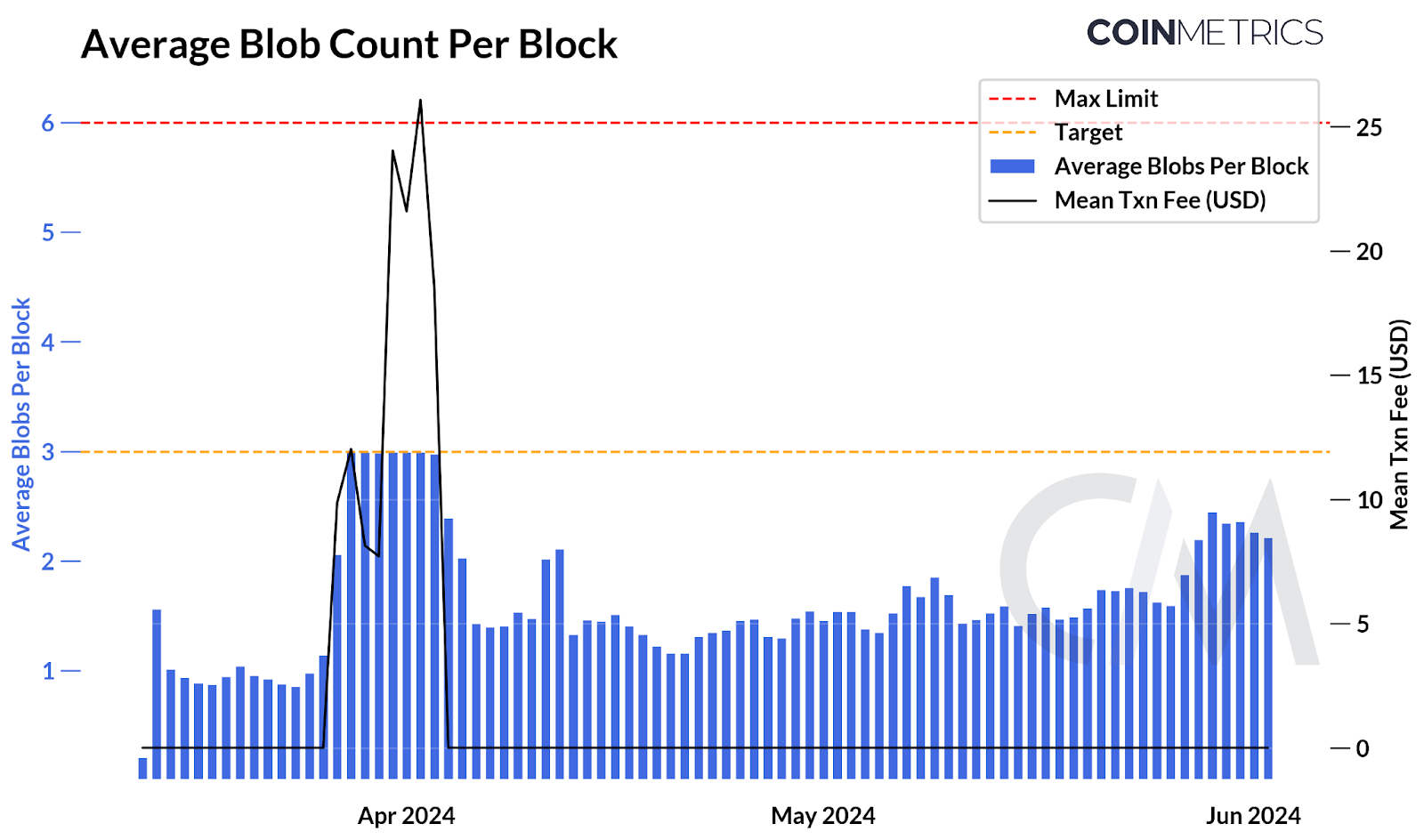
Track the blob base fee, which adjusts every block based on demand. Sudden spikes indicate market stress. Set alerts for when the fee exceeds historical averages to identify optimal execution windows.
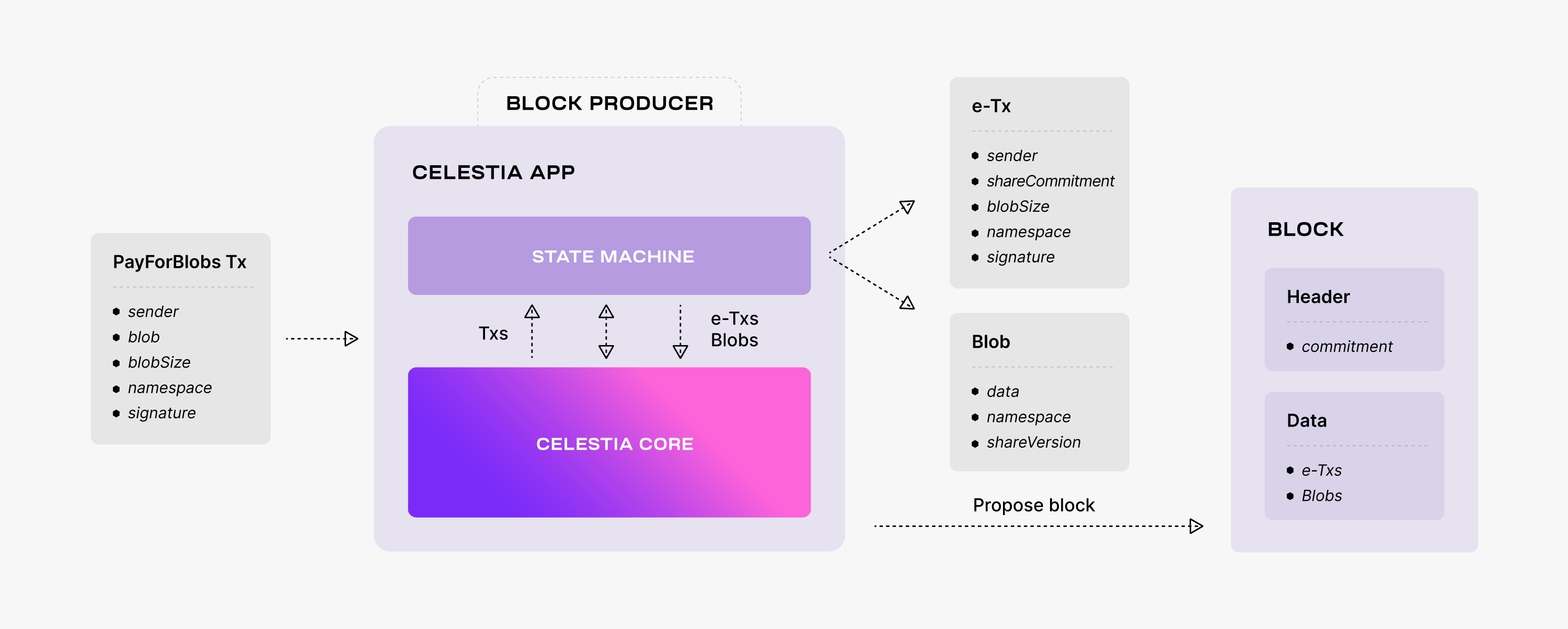
Separate the base fee from the priority fee (maxPriorityFeePerGas). High priority fees suggest users are paying for faster inclusion during congestion. Understanding this split helps in budgeting for urgent transactions.
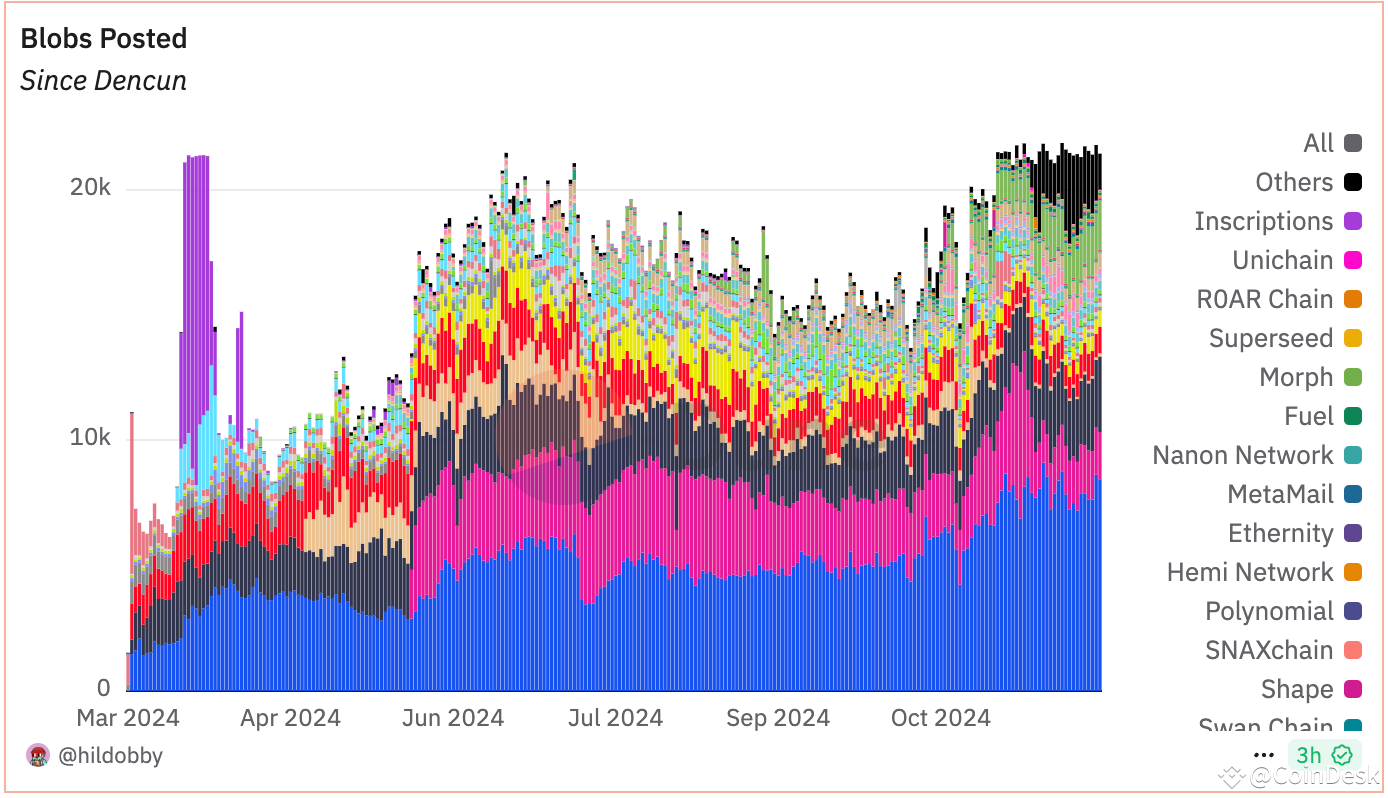
Compare blob costs across major Layer 2 rollups. Some L2s absorb blob fees, while others pass them directly to users. Use provider-backed charts to visualize fee differences and identify the most cost-effective networks.
Use this checklist to maintain a clear view of the blobspace market, ensuring efficient and cost-effective operations.

No comments yet. Be the first to share your thoughts!