
Why decentralization matters in 2026
The supply chain landscape of 2026 is defined by a fundamental shift in operational philosophy. Leading organizations are moving beyond the traditional focus on resilience toward a strategy of delivering "Total Value." This transition marks a departure from merely surviving disruptions to actively generating competitive advantage through decentralized structures. As KPMG notes in its 2026 supply chain trends analysis, this evolution is no longer optional for high-stakes logistics; it is a requirement for sustained market relevance.
Decentralized supply chain management addresses the inherent fragility of centralized hubs. By distributing authority and data across a blockchain framework, companies achieve greater transparency and traceability. This architecture allows for real-time verification of goods and processes, reducing the latency and single points of failure that plague legacy systems. The IEEE’s recent framework on decentralized management highlights how these technologies enable immutable record-keeping, which is critical for maintaining integrity in complex, multi-tiered networks.
The risks facing global logistics in 2026—ranging from rising trade tensions to escalating cyberattacks—demand a more agile response mechanism. Centralized models often struggle to adapt quickly to such fragmented threats. Decentralized systems, by contrast, offer a distributed resilience that can isolate and mitigate risks without halting entire operations. This capability is essential for navigating the volatile geopolitical and economic conditions expected to shape the year.
Ultimately, the move toward decentralization is about securing total value across the entire supply chain. It integrates financial, operational, and informational flows into a cohesive, transparent network. As the industry matures, those who fail to adopt these decentralized principles risk falling behind in a market that increasingly rewards speed, trust, and adaptability.
Blobspace markets and autonomous logistics
Decentralized supply chains are shifting from theoretical frameworks to operational reality through Blobspace markets. These environments allow logistics data to be stored directly on-chain using Ethereum's blob space, enabling high-throughput, low-cost transactions for complex supply chain events. Unlike traditional centralized databases, this architecture supports autonomous coordination where smart contracts execute trade agreements without intermediaries.
The integration of DAOs (Decentralized Autonomous Organizations) provides the governance layer necessary for trustless logistics. In this model, stakeholders—carriers, shippers, and auditors—vote on protocol parameters and dispute resolutions through token-weighted voting. This structure eliminates the need for a central authority to validate shipments or enforce contracts, reducing administrative overhead and fraud risk. As KPMG notes, leading supply chain operations in 2026 are moving beyond mere resilience toward delivering 'Total Value' through such transparent, automated systems.
Autonomous logistics relies on oracles to bridge physical events with digital execution. When a shipment arrives at a geofenced location, IoT sensors trigger an oracle that updates the smart contract, releasing payment or insurance claims instantly. This creates a self-executing supply chain where trust is cryptographic rather than relational. The IEEE framework for decentralized supply chain management highlights that this transparency significantly improves traceability and reduces the latency of financial settlements across global borders.

The economic implications of this shift are measurable. As decentralized logistics tokens gain traction, market indicators reflect increased liquidity in supply chain finance. The following chart illustrates the recent market capitalization trends for key decentralized logistics protocols, highlighting the growing institutional interest in autonomous supply chain infrastructure.
Centralized vs decentralized supply chains
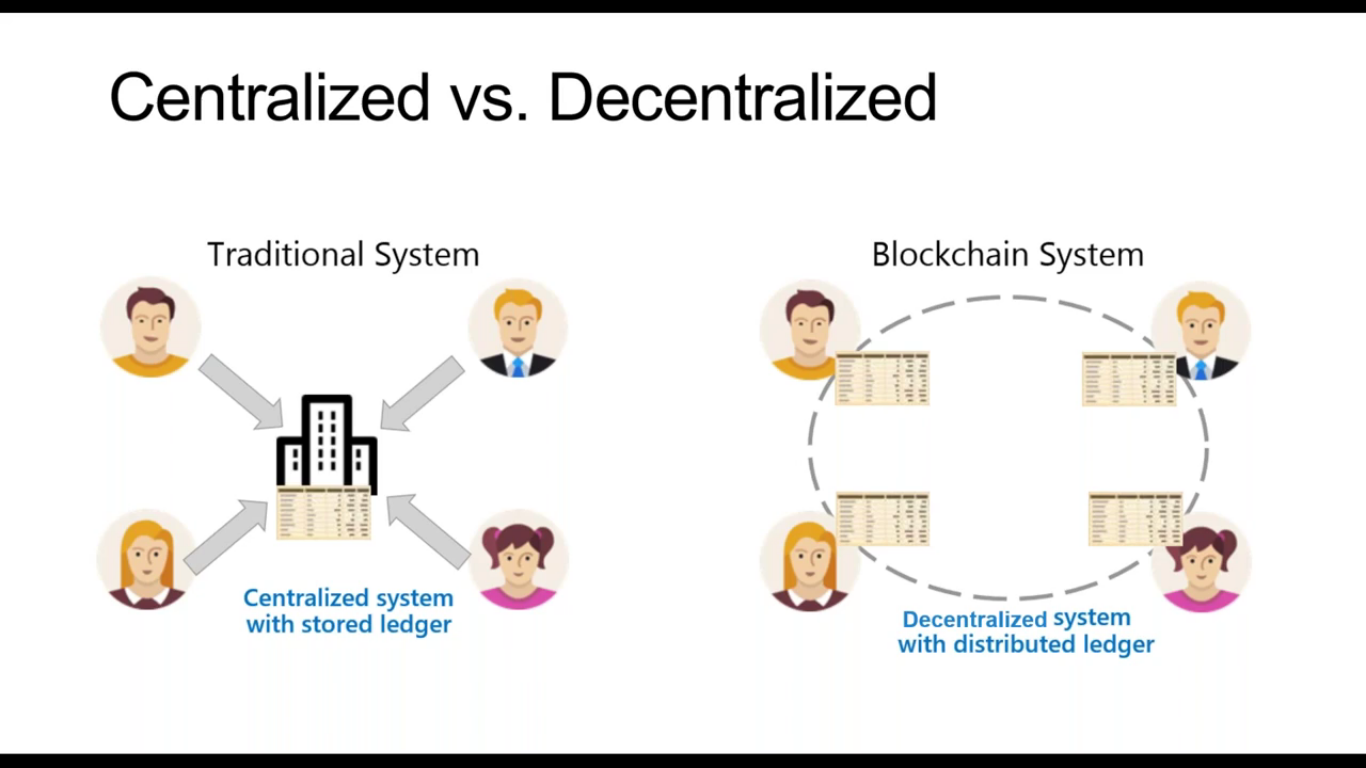
The debate between centralized and decentralized logistics models centers on a fundamental trade-off: operational efficiency versus structural resilience. As noted by KPMG, the industry is shifting from a pure focus on resilience to delivering "Total Value," a metric that weighs cost, speed, and risk mitigation equally KPMG. While centralized hubs offer streamlined control, decentralized frameworks using blockchain technology provide superior traceability and fault tolerance.
Centralized supply chains rely on a single point of truth managed by a dominant entity. This structure minimizes coordination costs and simplifies standardization, making it highly effective for high-volume, predictable flows. However, it creates fragility. When a central node fails—due to cyberattacks, geopolitical disruption, or logistical bottlenecks—the entire network stalls. In contrast, decentralized supply chains distribute data across a network of nodes. This architecture ensures that no single failure can halt operations, offering robust continuity during the rising trade tensions and conflict zones identified as key 2026 risks.
Traceability is where decentralization holds a distinct advantage. A blockchain framework enables immutable, real-time tracking of assets from origin to consumer, reducing fraud and cargo theft. IEEE research highlights that decentralized management systems significantly enhance transparency by allowing multiple stakeholders to verify data without relying on a central authority IEEE. This level of visibility is difficult to achieve in traditional centralized models, where data is often siloed or subject to manipulation.
The following comparison outlines the structural differences across key operational dimensions.
| Dimension | Centralized | Decentralized | Best For |
|---|---|---|---|
| Data Control | Single entity manages all data | Distributed across network nodes | Decentralized |
| Traceability | Limited to internal silos | End-to-end immutable ledger | Decentralized |
| Resilience | Vulnerable to single-point failures | Fault-tolerant, self-healing | Decentralized |
| Coordination Cost | Low, streamlined standards | Higher, requires consensus | Centralized |
| Speed of Execution | Fast, direct decision-making | Slower, requires verification | Centralized |
| Fraud Prevention | Relies on audits and trust | Cryptographic verification | Decentralized |
Key risks in decentralized logistics
Decentralized supply chain networks introduce distinct vulnerabilities that traditional centralized systems do not face. While blockchain offers immutable transparency, the infrastructure itself becomes a high-value target for malicious actors. KPMG’s 2026 supply chain trends analysis highlights that as operations move toward "Total Value" delivery, the attack surface expands significantly. Security is no longer just about protecting physical goods but securing the digital ledger that validates them.
Cyber threats have evolved from simple data theft to sophisticated attacks on consensus mechanisms and smart contracts. A single vulnerability in an autonomous logistics protocol can halt entire shipping routes, causing cascading delays. The IEEE Framework for Transparency and Traceability notes that decentralized architectures require rigorous cryptographic audits to prevent tampering. Unlike a centralized database, where a breach is contained, a compromised node in a DAO-driven supply chain can invalidate records across multiple jurisdictions.
Regulatory fragmentation adds another layer of complexity. Different regions enforce varying standards for data privacy and digital asset compliance. This lack of uniformity makes cross-border autonomous logistics difficult to scale without legal friction. Companies must navigate conflicting requirements for on-chain data storage and off-chain physical verification. Failure to align these decentralized systems with local regulations can result in severe penalties or operational shutdowns.
No comments yet. Be the first to share your thoughts!