

Decentralized data spaces limits to account for
The term "decentralized data spaces" describes a shift from centralized cloud silos to federated architectures where data remains under the control of its originator. This isn't just a technical upgrade; it's a structural change in how market sovereignty is defined. Instead of renting access to data stored on someone else's servers, organizations participate in networks that preserve ownership while enabling secure, standardized exchange.
The core constraint here is not bandwidth or storage, but trust and interoperability. For this model to work, every participant must adhere to identical governance rules and technical standards. The International Data Spaces Association (IDSA) explicitly recommends decentralized architectures because they best preserve participant control and ensure equal treatment across the network. Without this strict adherence, the "space" fractures into incompatible islands, defeating the purpose of shared market access.
Think of it like a global shipping port. You don't need to own the cargo to benefit from the port's efficiency, but you do need to follow the same container standards and customs protocols as everyone else. In the blob economy, data sovereignty is the container, and the decentralized space is the port infrastructure that allows your data to move freely without being seized or monopolized by a single intermediary.
Decentralized data spaces choices that change the plan
Choosing a data space architecture is not just a technical decision; it is a strategic choice about where power sits. The European Data Spaces Panel Report notes that decentralization is not strictly required for classification, yet the IDSA recommends it as the preferred approach for preserving participant control and equal treatment.
When evaluating these systems, you must weigh three concrete factors: control, interoperability, and cost. There is no single "best" model. The right choice depends on whether your primary goal is sovereignty, speed, or ecosystem breadth.
Control and Sovereignty
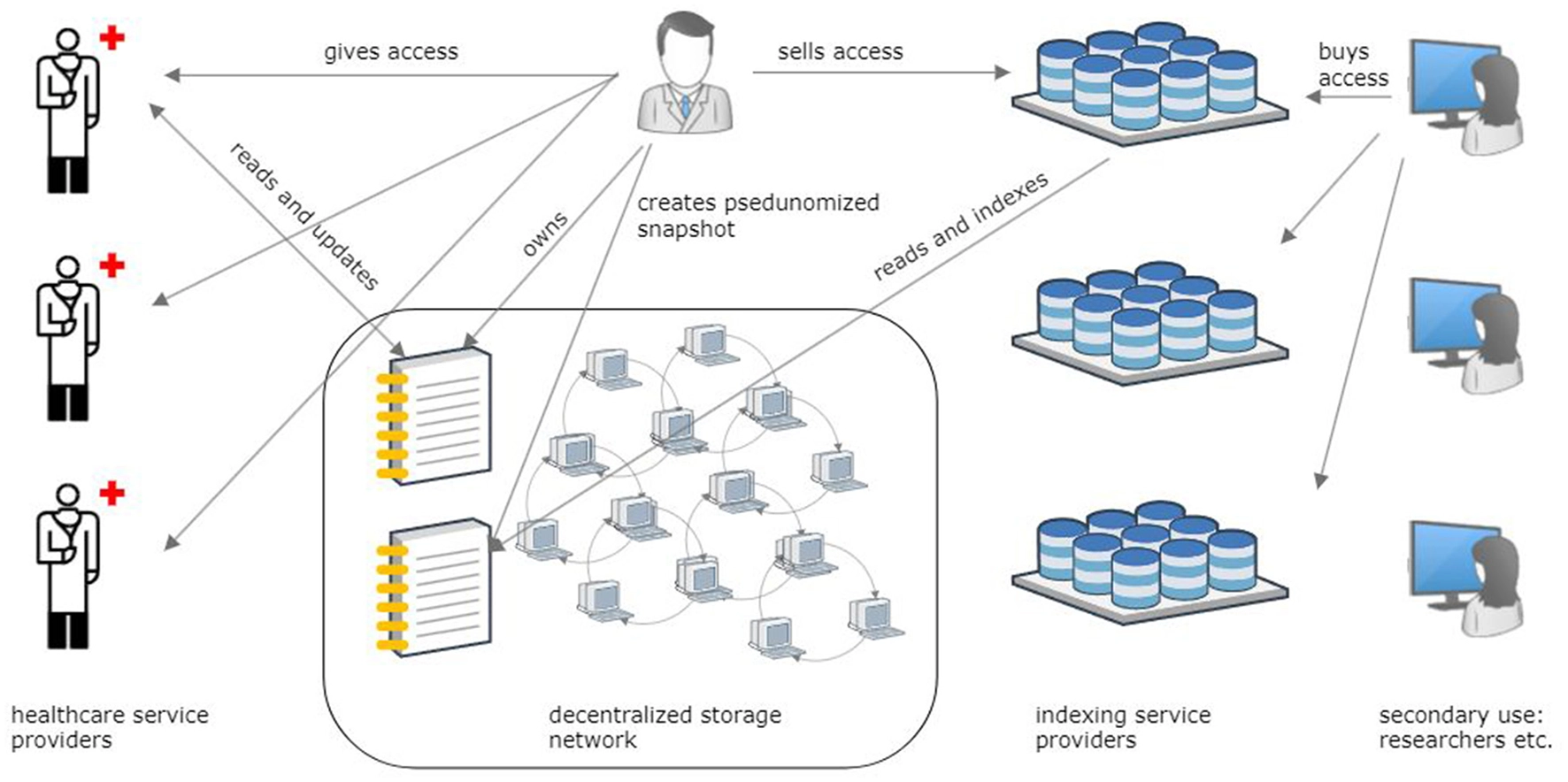
In a centralized model, the platform operator holds the keys. They can change terms, restrict access, or monetize data flows without your direct consent. Decentralized data spaces shift this dynamic. The IDSA framework emphasizes that decentralized architectures best preserve participant control. You retain ownership of your data and define the terms of its use via smart contracts or policy engines. This is critical for high-stakes industries like healthcare or finance, where regulatory compliance demands strict audit trails and user consent.
Interoperability and Network Effects
Decentralization often comes with a fragmentation penalty. If every organization runs its own node with unique protocols, connecting them becomes difficult. Centralized platforms offer a "walled garden" experience: everything works together because one entity enforces the standards. Decentralized spaces require robust cross-domain connectors and standardized interfaces (like GAIA-X or IDS) to function. If you join a space with few participants, the network effect is weak. You gain sovereignty but lose the immediate value of a large, unified marketplace.
Implementation Cost and Complexity
Building and maintaining a decentralized infrastructure is expensive. You need nodes, identity management systems, and governance mechanisms. Centralized solutions are often cheaper to start because the operator absorbs the infrastructure costs. However, centralized models carry hidden long-term costs: vendor lock-in and potential service fees that scale with your usage. Decentralized spaces spread these costs across participants, but the initial technical barrier is higher. For small enterprises, the overhead may outweigh the benefits of sovereignty.
| Factor | Centralized | Decentralized | Hybrid/GAIA-X |
|---|---|---|---|
| Data Control | Low (operator-driven) | High (participant-owned) | Medium (shared governance) |
| Interoperability | High (internal) | Low (fragmented) | High (standardized) |
| Implementation Cost | Low (subscription) | High (infrastructure) | Medium (shared) |
| Vendor Lock-in | High | Low | Medium |
| Governance | Top-down | Consensus-based | Federated |
How to Choose a Decentralized Data Space
The shift from centralized data silos to decentralized dataspaces is not just a technical upgrade; it is a structural change in how value flows. For organizations navigating the 2026 Blob Economy, selecting the right framework requires moving beyond vendor hype to evaluate control, interoperability, and sovereignty.
Here is a practical decision framework to guide your selection process.
Data sovereignty begins with identity. Before committing to a platform, audit how it handles digital identities and access policies. Does the system support self-sovereign identity (SSI) standards, or does it rely on centralized identity providers that create single points of failure? The IDSA emphasizes that decentralized architectures must preserve participant control and equal treatment. If a vendor locks your identity into their proprietary ledger, you are not building a data space; you are building a walled garden with extra steps.
A data space is only as valuable as the networks it connects to. Avoid platforms that rely on custom, closed-source protocols. Instead, look for adherence to open standards like the IDS Connector specification or GAIA-X compatibility layers. True decentralization means your data can move seamlessly between different organizational boundaries without custom adapters. If the vendor requires significant engineering effort to integrate with a partner, the friction will kill adoption before the first transaction occurs.
In a decentralized economy, trust is derived from transparency. Ensure the platform provides immutable audit trails for every data exchange. This is critical for compliance in regulated industries where you must prove who accessed what data and when. Look for mechanisms that embed metadata directly into the data payload or use a distributed ledger to log access events. Without verifiable provenance, you cannot enforce usage policies or recover from data misuse, rendering the "sovereignty" claim empty.

Sustainable data spaces require aligned economic incentives. Scrutinize how the platform compensates data providers and consumers. Does it use a tokenized model that rewards contribution, or a traditional subscription model that may disincentivize sharing? The goal is a "friendlier, fairer, and more innovative digital ecosystem" where value flows to those who contribute high-quality data. Avoid platforms with opaque fee structures or those that extract excessive rent from every transaction, as this will stifle network effects.
| Feature | Centralized Silo | Decentralized Space |
|---|---|---|
| Control | Vendor-held | User-held |
| Interoperability | Low | High |
| Auditability | Opaque | Transparent |
Choosing a decentralized data space is a strategic commitment to long-term sovereignty. By prioritizing open governance, interoperable protocols, and transparent incentives, you can build a resilient foundation for the next era of digital commerce.
Spotting the weak links in data sovereignty claims
The shift toward decentralized data spaces is often sold as a complete solution to data monopolies, but the reality is more nuanced. While the architecture offers better control, it introduces new risks that buyers must audit. Relying on vague promises of "trust" without verifying the underlying protocol is a common mistake that leaves organizations exposed.
The myth of automatic compliance
Many vendors claim their decentralized spaces automatically satisfy GDPR or CCPA requirements. This is rarely true. Decentralization distributes data, but it does not automatically manage consent or deletion rights across all nodes. You must verify if the specific implementation includes built-in mechanisms for data lifecycle management, or if you are inheriting a compliance burden rather than shedding one.
Over-reliance on single vendors
True decentralization requires interoperability between multiple providers. If a solution locks you into a single vendor’s proprietary extension of a standard, you have not gained sovereignty; you have just changed your landlord. Check for open-source connectors and adherence to established frameworks like the IDSA guidelines to ensure you can move data freely.
Ignoring the governance layer
Technical decentralization does not equal governance decentralization. Without clear rules for who can add data, who can access it, and how disputes are resolved, the system becomes chaotic. Look for transparent governance models with multi-stakeholder oversight. If the rules are hidden in a private whitepaper, the "sovereignty" is illusory.
Decentralized data spaces: what to check next
What is a decentralized data space and how does it differ from traditional cloud storage?
A decentralized data space is a federated architecture where data remains with its owner while being shared through standardized connectors. Unlike traditional cloud storage, which centralizes control in a single provider, these spaces allow organizations to pool, access, and process data without surrendering sovereignty. This approach reduces single points of failure and enhances security by keeping control distributed among participants rather than concentrated in one central repository.
Is decentralization required to classify a system as a data space in the EU?
No. According to the European Data Spaces Panel Report, being decentralized is not a strict requirement for classification within the EU framework. However, the IDSA recommends decentralized architectures as the preferred approach. This recommendation stems from the need to preserve participant control, ensure equal treatment, and maintain robust governance structures that traditional centralized models often struggle to provide at scale.
How do data spaces enable private AI without exposing raw data?
Data spaces facilitate secure data sharing between companies, allowing them to train private AI models on integrated insights that cannot be obtained from isolated datasets. By using decentralized connectors, organizations can contribute to a shared knowledge pool without exposing raw, sensitive information. This enables collaborative innovation and more accurate model training while maintaining strict compliance with data privacy regulations and proprietary boundaries.
What are the main benefits of adopting a decentralized data space?
Adopting a decentralized data space offers three primary benefits: enhanced data security, reduced risk of single points of failure, and true data sovereignty. Participants retain ownership and control over their data, deciding exactly what is shared and with whom. This structure fosters a fairer, more innovative digital ecosystem where trust is built on transparent, standardized protocols rather than reliance on a single vendor’s infrastructure.

No comments yet. Be the first to share your thoughts!